How LBH Yogyakarta Empowers Communities on the Frontlines of Climate Justice — Part 2: Stories from Pantai Sanglen
Climate JusticeOctober 5, 2026
Nico Novito
This is Part 2 of a two-part series on the advocacy of LBH Yogyakarta (Yogyakarta Legal Aid) that intersects with the issue of climate justice. In Pantai Sanglen, a beach situated in the Gunungkidul Regency of Yogyakarta, residents and small-scale tourism workers are navigating tensions between development, environmental protection, and community rights. With support from Pundi Asa, LBH Yogyakarta helps communities build the legal knowledge and collective strength needed to advocate for their future.
In Part 1, the experience of Kampung Laut residents shows how environmental change can create uncertainty over land and livelihoods. The case of Pantai Sanglen reveals another dimension of climate justice: the tension between development, environmental protection, and community rights.
Located on the southern coast of Gunungkidul, Yogyakarta, Pantai Sanglen has become the site of an ongoing dispute between local residents and a tourism development project. At stake is not only the future of small-scale livelihoods that have sustained the area for years, but also the protection of a fragile karst ecosystem that plays a critical role in storing water in one of Yogyakarta's driest regions.

Building Grassroots Power in Pantai Sanglen
Pantai Sanglen (Sanglen Beach) is a coastal area in the Gunungkidul Regency of Yogyakarta, which has increasingly become a popular tourist destination since the early 2010s. At first, the beach area was mainly full of local residents who opened traditional stalls (warung) to sell food and beverages to visitors.
However, as the surrounding areas in Gunungkidul became more and more popular with tourists—especially with the opening of various attractions in recent years—Pantai Sanglen was targeted next as the land where an exclusive tourist attraction and resort will be built by a private developer. This has resulted in a continuous dispute with the local residents who want to maintain their livelihoods in the beach area.
Back in 2022, the Sultanate of Yogyakarta—which has the authority over the so-called Sultan Ground, i.e., the land owned by the sultanate that can be managed by the public—issued a Serat Palilah letter[1] as a temporary permit for the private developer to use and manage the land of Pantai Sanglen, with a note that the local residents must be involved in the development.
The development plan has been met with resistance from residents who argue that the project threatens their livelihoods and access to coastal resources. Community members, including small-scale sellers and tourism workers, fear displacement from an area they have long relied on for economic activities.
Furthermore, the project is planned within a region that is part of the Gunungsewu karst landscape, an ecologically sensitive area known for its unique geological and coastal ecosystems. Karst itself is known to capture and store water in the otherwise dry land of Gunungkidul.
“The land of Gunungkidul is dry by nature and it was hard to access water in the region, especially with the drought brought about by the changing climate. Meanwhile, these resorts and mass tourist attractions use a lot of water, so they will directly affect the local residents,” said Kharisma Wardhatul Khusniah, the current director of LBH Yogyakarta for the period of 2026–2030. “There will also be potential damage to the karst ecosystem, which is needed to store clean water resources in the region.”
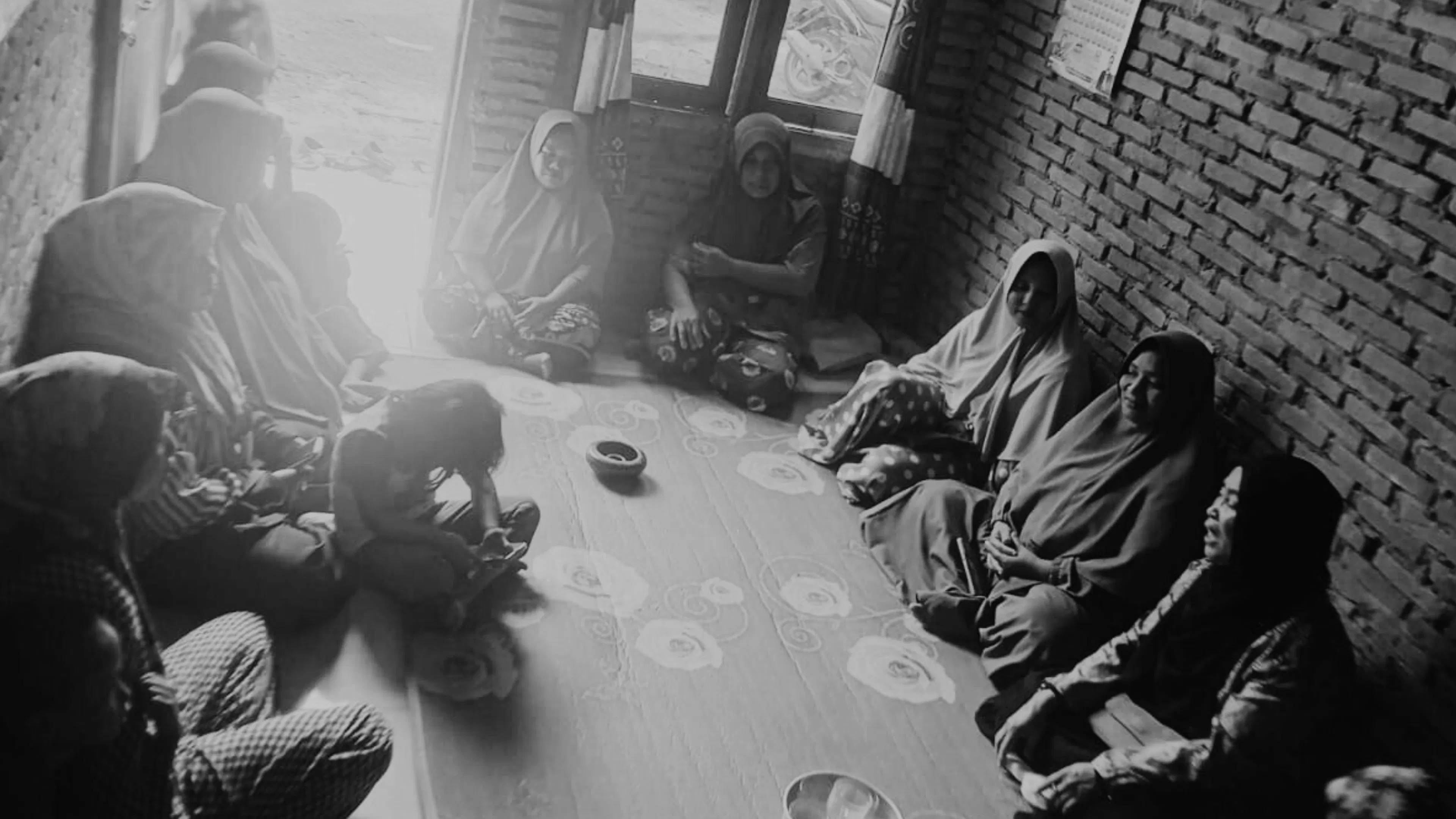
In supporting the local communities to fight for their rights in using the land, LBH Yogyakarta realized the importance of informing and educating the residents about their legal rights first. “Back in June 2024, a representative of the community reached out to us to consult on how to defend their land,” said Imam Amalda Rizki Harahap, the member of LBH Yogyakarta’s advocacy team in Pantai Sanglen. The team then started providing workshops on critical legal education and organizing a movement for residents who want to protect their livelihoods.
Over time, this organizing and educational efforts led to the formation of Paguyuban Sanglen Berdaulat (Sovereign Sanglen Association) in August 2025, consisting of more than 50 residents who maintained their stalls on the beach. With support from LBH Yogyakarta, the residents also did several hearings with Indonesia’s House of Representatives as well as the Sultanate’s representatives. They also staged protests and refused demands for area clearance. This was despite some residents’ eyewitness claims that they had received pressure from unidentified individuals in the form of destruction of a local stall as well as handwritten messages with threatening tones, as reported by Detik.com.
To date, the residents still carry out their daily activities on the land, but Imam admitted that in the background, “the situation is still a constant silent threat.” This is especially due to the fact that the Yogyakarta governor has extended the permit for the local government to lend the land for the private tourism development project until 2027. “Therefore, we are thinking of other strategies on how to stop this development, including challenging the status of the project’s other permits, such as its spatial and environmental permits,” Imam explained.
By providing better access to information and education about their rights to the Pantai Sanglen community, LBH Yogyakarta not only acts as a partner but also an organization that empowers them to stand on their own feet in the face of oppression. With support from Pundi Asa so far, we can already see a concrete impact, whereby around 53 members of the Pantai Sanglen community managed to secure continued access to the coastal areas, while efforts to obtain formal legal recognition are still ongoing.
The case highlights broader tensions between the rights of grassroots community, environmental protection, and private business interest. While the Sultanate and local government maintain that the land in Pantai Sanglen is legally recognized as Sultan Ground and support the development project, affected residents have called for greater participation in decision-making processes and safeguards for their livelihoods. In doing so, they also help the preservation of the surrounding natural karst ecosystem, which the Gunungkidul region highly depends on.

[1] Serat Palilah is a temporary official permit letter issued by the Sultanate of Yogyakarta to allow the appointed resident or organization to use and manage Sultan Ground before a permanent permit called Serat Kekancingan is issued.
Toward a More Collaborative Climate Movement
The stories shared by LBH Yogyakarta’s team from their advocacy in Kampung Laut and Pantai Sanglen reveal that climate justice is ultimately about people. While climate change is often associated with rising temperatures, droughts, or environmental degradation, its impacts are felt most directly by communities whose livelihoods and living spaces depend on healthy ecosystems. In both cases, environmental pressures intersect with unequal power relations, creating situations where local residents must fight not only to protect nature, but also to defend their rights and dignity against businesses and the authorities.
For LBH Yogyakarta, these cases reaffirm an important lesson: meaningful advocacy goes beyond legal representation. Building community awareness, strengthening local leadership, and ensuring that people understand their rights are equally important parts of the struggle. When communities are equipped with legal knowledge, access to information, and skills to start a campaign, they are better positioned to advocate for themselves and participate in decisions that affect their lives.

The cases also demonstrate why sustained support for civil society organizations like LBH Yogyakarta matters. Advocacy in remote and challenging locations requires time, resources, and consistent engagement. Through our support, Pundi Asa has helped strengthen LBH Yogyakarta's ability to accompany communities, provide legal education, and respond to urgent challenges on the ground. While the outcomes of these cases are still unfolding, the progress achieved so far shows how strategic support can help create lasting impact.
As Indonesia continues to face the growing effects of the climate crisis, climate justice cannot be achieved by any single actor alone. It requires genuine collaboration among communities, civil society organizations, funders, policymakers, and the wider public. The local communities of Kampung Laut and Pantai Sanglen remind us that protecting the environment and protecting people's rights are inseparable goals, and that lasting solutions begin by listening to and empowering those on the frontlines.
If you haven’t, read more about LBH Yogyakarta’s advocacy in Kampung Laut in Part 1 of the series.
In Part 1, the experience of Kampung Laut residents shows how environmental change can create uncertainty over land and livelihoods. The case of Pantai Sanglen reveals another dimension of climate justice: the tension between development, environmental protection, and community rights.
Located on the southern coast of Gunungkidul, Yogyakarta, Pantai Sanglen has become the site of an ongoing dispute between local residents and a tourism development project. At stake is not only the future of small-scale livelihoods that have sustained the area for years, but also the protection of a fragile karst ecosystem that plays a critical role in storing water in one of Yogyakarta's driest regions.
Building Grassroots Power in Pantai Sanglen
Pantai Sanglen (Sanglen Beach) is a coastal area in the Gunungkidul Regency of Yogyakarta, which has increasingly become a popular tourist destination since the early 2010s. At first, the beach area was mainly full of local residents who opened traditional stalls (warung) to sell food and beverages to visitors.
However, as the surrounding areas in Gunungkidul became more and more popular with tourists—especially with the opening of various attractions in recent years—Pantai Sanglen was targeted next as the land where an exclusive tourist attraction and resort will be built by a private developer. This has resulted in a continuous dispute with the local residents who want to maintain their livelihoods in the beach area.
Back in 2022, the Sultanate of Yogyakarta—which has the authority over the so-called Sultan Ground, i.e., the land owned by the sultanate that can be managed by the public—issued a Serat Palilah letter[1] as a temporary permit for the private developer to use and manage the land of Pantai Sanglen, with a note that the local residents must be involved in the development.
The development plan has been met with resistance from residents who argue that the project threatens their livelihoods and access to coastal resources. Community members, including small-scale sellers and tourism workers, fear displacement from an area they have long relied on for economic activities.
Furthermore, the project is planned within a region that is part of the Gunungsewu karst landscape, an ecologically sensitive area known for its unique geological and coastal ecosystems. Karst itself is known to capture and store water in the otherwise dry land of Gunungkidul.
“The land of Gunungkidul is dry by nature and it was hard to access water in the region, especially with the drought brought about by the changing climate. Meanwhile, these resorts and mass tourist attractions use a lot of water, so they will directly affect the local residents,” said Kharisma Wardhatul Khusniah, the current director of LBH Yogyakarta for the period of 2026–2030. “There will also be potential damage to the karst ecosystem, which is needed to store clean water resources in the region.”
In supporting the local communities to fight for their rights in using the land, LBH Yogyakarta realized the importance of informing and educating the residents about their legal rights first. “Back in June 2024, a representative of the community reached out to us to consult on how to defend their land,” said Imam Amalda Rizki Harahap, the member of LBH Yogyakarta’s advocacy team in Pantai Sanglen. The team then started providing workshops on critical legal education and organizing a movement for residents who want to protect their livelihoods.
Over time, this organizing and educational efforts led to the formation of Paguyuban Sanglen Berdaulat (Sovereign Sanglen Association) in August 2025, consisting of more than 50 residents who maintained their stalls on the beach. With support from LBH Yogyakarta, the residents also did several hearings with Indonesia’s House of Representatives as well as the Sultanate’s representatives. They also staged protests and refused demands for area clearance. This was despite some residents’ eyewitness claims that they had received pressure from unidentified individuals in the form of destruction of a local stall as well as handwritten messages with threatening tones, as reported by Detik.com.
To date, the residents still carry out their daily activities on the land, but Imam admitted that in the background, “the situation is still a constant silent threat.” This is especially due to the fact that the Yogyakarta governor has extended the permit for the local government to lend the land for the private tourism development project until 2027. “Therefore, we are thinking of other strategies on how to stop this development, including challenging the status of the project’s other permits, such as its spatial and environmental permits,” Imam explained.
By providing better access to information and education about their rights to the Pantai Sanglen community, LBH Yogyakarta not only acts as a partner but also an organization that empowers them to stand on their own feet in the face of oppression. With support from Pundi Asa so far, we can already see a concrete impact, whereby around 53 members of the Pantai Sanglen community managed to secure continued access to the coastal areas, while efforts to obtain formal legal recognition are still ongoing.
The case highlights broader tensions between the rights of grassroots community, environmental protection, and private business interest. While the Sultanate and local government maintain that the land in Pantai Sanglen is legally recognized as Sultan Ground and support the development project, affected residents have called for greater participation in decision-making processes and safeguards for their livelihoods. In doing so, they also help the preservation of the surrounding natural karst ecosystem, which the Gunungkidul region highly depends on.
[1] Serat Palilah is a temporary official permit letter issued by the Sultanate of Yogyakarta to allow the appointed resident or organization to use and manage Sultan Ground before a permanent permit called Serat Kekancingan is issued.
Toward a More Collaborative Climate Movement
The stories shared by LBH Yogyakarta’s team from their advocacy in Kampung Laut and Pantai Sanglen reveal that climate justice is ultimately about people. While climate change is often associated with rising temperatures, droughts, or environmental degradation, its impacts are felt most directly by communities whose livelihoods and living spaces depend on healthy ecosystems. In both cases, environmental pressures intersect with unequal power relations, creating situations where local residents must fight not only to protect nature, but also to defend their rights and dignity against businesses and the authorities.
For LBH Yogyakarta, these cases reaffirm an important lesson: meaningful advocacy goes beyond legal representation. Building community awareness, strengthening local leadership, and ensuring that people understand their rights are equally important parts of the struggle. When communities are equipped with legal knowledge, access to information, and skills to start a campaign, they are better positioned to advocate for themselves and participate in decisions that affect their lives.
The cases also demonstrate why sustained support for civil society organizations like LBH Yogyakarta matters. Advocacy in remote and challenging locations requires time, resources, and consistent engagement. Through our support, Pundi Asa has helped strengthen LBH Yogyakarta's ability to accompany communities, provide legal education, and respond to urgent challenges on the ground. While the outcomes of these cases are still unfolding, the progress achieved so far shows how strategic support can help create lasting impact.
As Indonesia continues to face the growing effects of the climate crisis, climate justice cannot be achieved by any single actor alone. It requires genuine collaboration among communities, civil society organizations, funders, policymakers, and the wider public. The local communities of Kampung Laut and Pantai Sanglen remind us that protecting the environment and protecting people's rights are inseparable goals, and that lasting solutions begin by listening to and empowering those on the frontlines.
If you haven’t, read more about LBH Yogyakarta’s advocacy in Kampung Laut in Part 1 of the series.